Golden Shilajit Official | EUROFINS Tested | Pure Himalayan Shilajit Resin

Private Label Shilajit Manufacturer & Wholesale Supplier: Complete Buyer's Guide
Looking for a private label Shilajit manufacturer or wholesale supplier? Learn what's required to buy, what to look for, and red flags to avoid. Complete buyer's guide.
5/12/20265 min read
The Growing Demand for Private Label Shilajit
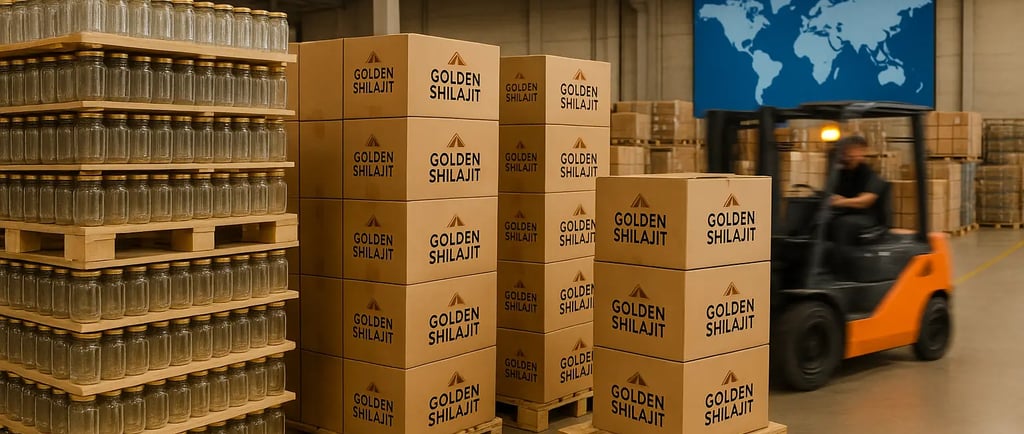
The global adaptogen and natural supplement market is experiencing unprecedented growth. Shilajit — once a niche Ayurvedic remedy known only to wellness insiders — has become one of the fastest-growing supplement categories worldwide, driven by surging consumer interest in testosterone support, energy, cognitive performance, and natural anti-ageing solutions.
For supplement brands, health retailers, gyms, wellness clinics, and e-commerce entrepreneurs, this represents a significant commercial opportunity. Private label Shilajit allows businesses to launch their own branded Shilajit product without the complexity of sourcing raw material, managing purification, or building manufacturing infrastructure from scratch.
But not all private label Shilajit manufacturers are equal — and choosing the wrong supplier can expose your brand to serious quality, legal, and reputational risks. This guide covers everything you need to know before placing a wholesale or private label order.
What Is Private Label Shilajit?
Private label Shilajit means purchasing bulk Shilajit — resin, powder, or extract — from a manufacturer and selling it under your own brand name, with your own packaging, labelling, and marketing. The manufacturer handles sourcing, purification, and quality control; you handle branding, marketing, and sales.
This model is used by supplement brands of all sizes — from solo e-commerce entrepreneurs launching their first product to established health brands expanding their range.
Types of Shilajit Available for Private Label & Wholesale
1. Shilajit Resin (Highest Grade)
Pure Shilajit resin is the least processed, most potent form. It retains the highest concentration of fulvic acid, dibenzo-alpha-pyrones (DBPs), and trace minerals. Resin is the gold standard for quality-focused brands targeting informed consumers who understand the difference between forms.
Fulvic acid content: 30–50%
Shelf life: 2–3 years when stored correctly
Best for: Premium positioning, health-conscious consumers, direct-to-consumer brands
2. Shilajit Powder / Dry Extract
Shilajit powder is produced by drying and spray-drying the resin, making it suitable for capsule and tablet manufacturing. Some bioactive compounds are reduced during the drying process, but powder offers significant advantages for certain product formats.
Fulvic acid content: Typically 30–50% (varies by processing method)
Best for: Capsule products, blended formulations, convenience-focused brands
3. Shilajit Liquid Extract / Drops
Liquid Shilajit extract offers high bioavailability and ease of use. It is produced by dissolving purified resin in water or a carrier solution, making it suitable for dropper bottle formats.
Best for: Brands targeting convenience, fast absorption, and premium liquid supplement positioning
What to Look for in a Private Label Shilajit Manufacturer
This is the most critical section of this guide. The quality of your supplier determines the quality of your product — and ultimately, your brand’s reputation.
1. Third-Party Laboratory Testing (Non-Negotiable)
Any reputable private label Shilajit manufacturer must provide batch-specific Certificates of Analysis (CoA) from accredited, independent third-party laboratories. These must cover:
Fulvic acid content — with a specific percentage, not a vague claim
Heavy metal screening — lead, arsenic, mercury, and cadmium levels against USP, EU, or equivalent international standards
Microbial testing — E. coli, Salmonella, total plate count, moulds, and yeasts
Authenticity markers — presence of dibenzo-alpha-pyrones (DBPs) confirms genuine Shilajit
If a manufacturer cannot provide these documents, or provides only in-house testing results, walk away. Heavy metal contamination in Shilajit is a real and documented risk — it is not a theoretical concern.
2. GMP Certification
Good Manufacturing Practice (GMP) certification ensures the manufacturer operates to internationally recognised quality and safety standards. For supplement brands selling in the UK, EU, USA, or Australia, GMP certification is often a regulatory requirement and always a consumer trust signal.
3. Sourcing Transparency
Ask your manufacturer where their Shilajit is sourced. High-quality Shilajit comes from high-altitude regions — ideally above 3,000 metres — in the Himalayas, Altai, or Caucasus mountains. Manufacturers who cannot or will not disclose their sourcing region are a red flag.
4. Purification Process
The purification method directly affects the quality of the final product. Low-temperature purification preserves the heat-sensitive fulvic acid and bioactive compounds. Ask your manufacturer to describe their purification process and confirm it does not involve excessive heat or chemical solvents.
5. BSCG or NSF Certification (For Sports Nutrition Brands)
If you are targeting athletes or the sports nutrition market, BSCG (Banned Substances Control Group) or NSF Certified for Sport certification is essential. These certifications verify that the product is free from substances banned by major sports organisations — a critical requirement for brands selling to competitive athletes.
6. Minimum Order Quantities (MOQs)
MOQs vary significantly between manufacturers. Typical ranges:
Resin: 1kg – 10kg minimum for wholesale; 5kg–25kg for private label
Powder: 1kg – 5kg minimum
Liquid extract: 5–10 litres minimum
Be cautious of manufacturers offering very low MOQs with no quality documentation — this often indicates low-grade or adulterated material.
What Is Required to Buy Wholesale or Private Label Shilajit?
Requirements vary by manufacturer and jurisdiction, but here is what most reputable suppliers will ask for:
Business Documentation
Business registration certificate — proof that you operate a legitimate business entity
VAT or tax registration number (where applicable)
Supplement or food business registration — required in the UK (FSA registration), EU, USA (FDA facility registration), and Australia (TGA)
Regulatory Compliance
Understanding of supplement labelling regulations in your target market (UK, EU, USA, etc.)
Compliance with health claims regulations — what you can and cannot say about Shilajit on your label
Product liability insurance — strongly recommended for any supplement brand
Labelling Requirements
Your private label packaging must comply with the regulations of your target market. Key requirements typically include:
Ingredient list with quantities
Allergen declarations
Recommended daily dose
Warnings and contraindications
Manufacturer or responsible person details
Batch number and expiry date
Country of origin
Financial Requirements
Deposit or full payment upfront (varies by manufacturer)
Budget for packaging design and printing
Import duties and customs clearance costs (for international orders)
Storage and fulfilment infrastructure
Key Questions to Ask Any Private Label Shilajit Manufacturer
Can you provide batch-specific third-party CoAs covering heavy metals, fulvic acid content, and microbial testing?
What is your sourcing region and altitude?
What purification method do you use?
Are you GMP certified? Can you provide your certificate?
What are your MOQs for resin, powder, and liquid extract?
What is your lead time from order to delivery?
Do you offer custom packaging and labelling services?
What is your returns or quality dispute policy?
Are you BSCG or NSF certified?
Red Flags to Avoid
❌ No third-party lab reports available
❌ Claiming 51 to 100% fulvic acid content (scientifically impossible)
❌ Unable or unwilling to disclose sourcing region
❌ Prices significantly below market rate (often indicates adulterated or low-grade material)
❌ No GMP certification
❌ Vague or evasive answers about purification methods
❌ No physical address or verifiable business registration
❌ Pressure to order large quantities before providing samples
The Private Label Shilajit Market Opportunity
The global Shilajit market was valued at over $60 million in 2023 and is projected to grow at a compound annual growth rate (CAGR) of over 20% through 2030. Key growth drivers include:
Rising consumer interest in natural testosterone support and male health
Growing awareness of adaptogens and stress management supplements
Expansion of the sports nutrition market beyond protein powders
Increasing demand for premium, science-backed natural supplements
Social media and influencer-driven awareness of Shilajit benefits
For brands entering this space now, the opportunity to establish category authority before the market becomes saturated is significant.
Why Partner with Golden Shilajit?
Golden Shilajit is a trusted source of premium Himalayan Shilajit with a proven track record of quality, transparency, and customer satisfaction. Our wholesale and private label offering includes:
✅ BSCG Certified — safe for athletes and sports nutrition brands
✅ GMP and ISO Certified manufacturing
✅ Eurofins lab-tested — batch-specific CoAs for every order
✅ High-altitude Himalayan sourcing — above 3,000 metres
✅ 30–50% fulvic acid verified per batch
✅ Resin, powder, and liquid extract formats available
✅ Custom packaging and labelling support
✅ Worldwide shipping with full documentation
Whether you are launching your first supplement brand or expanding an established product range, we provide the quality foundation your brand deserves.
Ready to discuss wholesale or private label pricing? Contact our team via WhatsApp or our contact form and we will respond within 24 hours with pricing, MOQs, and sample availability.
Contact
Follow
info@goldenshilajit.pk
Whatsapp-03348455205
© 2026. Golden Shilajit offcial All rights reserved.
Golden Shilajit Pakistan is a registered brand of Himalayan Innate Pvt Ltd.
Unauthorized sale or distribution is strictly prohibited and will result in legal action.
These statements have not been evaluated by the Food and Drug Administration. This product is not intended to diagnose, treat, cure, or prevent any disease.