Golden Shilajit Official | EUROFINS Tested | Pure Himalayan Shilajit Resin

How to Identify Real vs Fake Shilajit | Complete Authenticity Guide 2026
Learn how to identify real vs fake Shilajit with this complete guide. Discover purification signs, laboratory testing, texture, smell, dissolution, and authenticity verification tips.
Written by Dr. Hamza Nutraceutical Research Specialist, Golden Shilajit Official Research Team Reviewed by the Golden Shilajit Research Team Experience: 14+ Years of Himalayan Shilajit Sourcing, Purification, and Laboratory Verification Experience Published: May 2026
10/23/20254 min read
How to Identify Real vs Fake Shilajit, A Comprehensive Authenticity Guide
Written by Dr. Hamza
Nutraceutical Research Specialist, Golden Shilajit Official Research Team
Reviewed by the Golden Shilajit Research Team
Experience:
14+ Years of Himalayan Shilajit Sourcing, Purification, and Laboratory Verification Experience
Published:
May 2026
The global demand for Himalayan Shilajit has increased rapidly over the last few years. More people now search for authentic resin to support energy, focus, stamina, and overall wellness.
Unfortunately, the rise in popularity has also created a major problem. The market is now filled with fake, poorly purified, synthetic, and untested products sold under the name of “pure Shilajit.”
Many buyers cannot easily distinguish between authentic Himalayan resin and low quality marketplace products.
This guide explains how to identify real vs fake Shilajit using scientific, physical, and purification based indicators.
Key Takeaways
• Authentic Shilajit should be laboratory tested
• Real resin usually dissolves gradually in warm water
• Fake products often contain additives or impurities
• Purification quality strongly affects texture and safety
• Laboratory verification helps confirm authenticity
• Unrealistic fulvic acid claims are common in the market
Table of Contents
What Is Authentic Shilajit
Why Fake Shilajit Is Common
How Real Shilajit Looks
Smell and Taste Differences
Real vs Fake Dissolution Test
Texture and Temperature Behavior
Why Laboratory Testing Matters
Common Signs of Fake Shilajit
Why Purification Is Important
Understanding Fulvic Acid Claims
Real vs Fake Shilajit Comparison Table
Frequently Asked Questions
Final Thoughts
What Is Authentic Shilajit?
Authentic Shilajit is a natural mineral rich resin formed over centuries in high altitude mountainous regions such as the Himalayas and Karakoram ranges.
Real resin naturally contains:
• fulvic acid
• humic substances
• trace minerals
• organic compounds
Authentic Himalayan resin is harvested carefully from mountain rock surfaces and then purified before use.
You can learn more about natural resin composition on the official Shilajit Benefits and Composition page:
https://goldenshilajit.pk/shilajit-benefits-and-composition
Why Fake Shilajit Is Common
The Shilajit industry has become highly competitive.
Many low quality products now use:
• artificial fillers
• excessive heating
• synthetic fulvic mixtures
• poor purification methods
• fake laboratory reports
Some sellers focus more on marketing claims than actual scientific verification.
This is why buyers should always look for:
• transparency
• testing reports
• source information
• purification details
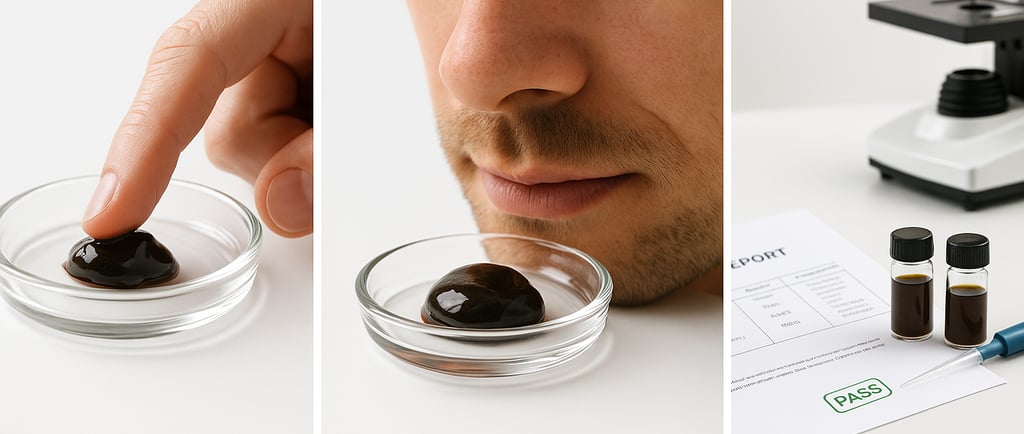
How Real Shilajit Looks
Authentic Himalayan resin usually has:
• dark brown to black color
• glossy appearance
• natural shine
• softening behavior when warmed
Real resin should not look:
• like hard plastic
• extremely dry
• chemically glossy
• artificially sticky
Customers looking for authentic resin can explore the official Golden Shilajit Resin page:
https://goldenshilajit.pk/golden-shilajit-20g-pure-himalayan-shilajit
Smell and Taste Differences
Authentic Shilajit Smell
Real Shilajit usually has:
• earthy aroma
• mineral rich scent
• natural mountain smell
Fake Shilajit Smell
Low quality products may smell:
• chemical
• smoky
• burnt
• artificial
Taste
Authentic resin usually tastes:
• naturally bitter
• mineral rich
• earthy
Artificially sweet or flavored products should raise concerns regarding authenticity.
Real vs Fake Dissolution Test
One of the simplest ways to examine resin quality is the warm water dissolution test.
Authentic Resin
• dissolves gradually in warm water
• creates brown or golden liquid appearance
• leaves minimal residue when purified properly
Fake Products
• excessive residue
• floating particles
• chemical odor
• poor dissolution behavior
This test alone cannot fully verify authenticity, but it can help identify obvious quality issues.
Texture and Temperature Behavior
Authentic resin reacts naturally to temperature.
In Warm Conditions
Real Shilajit becomes:
• softer
• more flexible
• easier to handle
In Cold Conditions
It may become:
• firmer
• less flexible
However, authentic resin should not behave like:
• hardened plastic
• industrial glue
• rubber material
Why Laboratory Testing Matters
Third party laboratory verification is one of the strongest indicators of authentic Shilajit quality.
Proper testing should include:
• heavy metal analysis
• microbial testing
• mineral profile
• contamination screening
• fulvic acid analysis
Advanced laboratories often use ICP MS testing for trace element and heavy metal verification.
What Is ICP MS?
ICP MS stands for Inductively Coupled Plasma Mass Spectrometry.
It is an advanced scientific method used for detecting heavy metals and trace elements at extremely low levels.
You can review official testing information and reports on the Golden Shilajit Lab Report page:
https://goldenshilajit.pk/shilajit-lab-report
Common Signs of Fake Shilajit
Be cautious if a product:
• has no laboratory report
• claims unrealistic fulvic acid percentages
• hides source information
• dissolves poorly
• smells strongly chemical
• uses aggressive marketing without transparency
Many fake products also focus heavily on:
• extremely low pricing
• exaggerated claims
• unrealistic purity numbers
Why Purification Is Important
Raw mountain resin naturally contains:
• impurities
• sand particles
• plant residue
• environmental contaminants
Purification is necessary for:
• safety
• quality
• consistency
• proper mineral preservation
Traditional purification and controlled drying methods may take several weeks.
Rapid industrial heating methods can negatively affect resin quality.
Understanding Fulvic Acid Claims
Fulvic acid is one of the most discussed components found naturally in Shilajit.
However:
• testing methods vary
• laboratories use different standards
• exaggerated numbers are common
Authentic Shilajit quality depends on:
• purification quality
• mineral composition
• source authenticity
• laboratory verification
Not only marketing percentages.
Real vs Fake Shilajit Comparison
Authentic Shilajit
• Source: Himalayan mountains
• Testing: Third party verified
• Purification: Slow controlled process
• Dissolution: Gradual in warm water
• Smell: Earthy and natural
• Texture: Natural resin consistency
• Transparency: Clear testing details
Fake or Low Quality Products
• Source: Unknown or mixed
• Testing: Often unavailable
• Purification: Rapid processing
• Dissolution: Excess residue
• Smell: Chemical or burnt
• Texture: Artificially sticky
• Transparency: Marketing focused
Frequently Asked Questions
Can fake Shilajit contain contaminants?
Yes. Poorly purified or untested products may contain contaminants or additives.
Why does authentic Shilajit dissolve better in warm water?
Warm water helps soften natural resin structure and improves dissolution.
Why are laboratory reports important?
Testing helps verify:
• purity
• safety
• heavy metal screening
• authenticity
Is very cheap Shilajit usually authentic?
Authentic Himalayan resin requires harvesting, purification, drying, and laboratory testing. Extremely cheap products may raise quality concerns.
Why does real Shilajit change texture with temperature?
Authentic resin naturally reacts to temperature changes because of its organic mineral composition.
Final Thoughts
The increasing popularity of Shilajit has also increased the number of fake and low quality products in the market.
Authentic Himalayan resin should always provide:
• transparent laboratory testing
• proper purification information
• realistic scientific explanations
• responsible sourcing details
Understanding the differences between real and fake Shilajit helps buyers make safer and more informed decisions.
As customers become more educated, transparency and scientific verification are becoming far more important than marketing claims alone.
Contact
Follow
info@goldenshilajit.pk
Whatsapp-03348455205
© 2026. Golden Shilajit offcial All rights reserved.
Golden Shilajit Pakistan is a registered brand of Himalayan Innate Pvt Ltd.
Unauthorized sale or distribution is strictly prohibited and will result in legal action.
These statements have not been evaluated by the Food and Drug Administration. This product is not intended to diagnose, treat, cure, or prevent any disease.