Exclusive discounts on Golden shilajit!

Best Shilajit in Pakistan : Complete 2026 Buyer's Guide
Looking for the best shilajit in Pakistan? Learn how to identify real vs fake shilajit, verify Eurofins lab reports, and buy authentic Himalayan resin safely.
Written by Dr. Hamza Khan Wellness Researcher & Natural Supplements Analyst — Golden Shilajit Reviewed by the Golden Shilajit Quality Assurance Team Last updated: November 2026
5/26/202618 min read
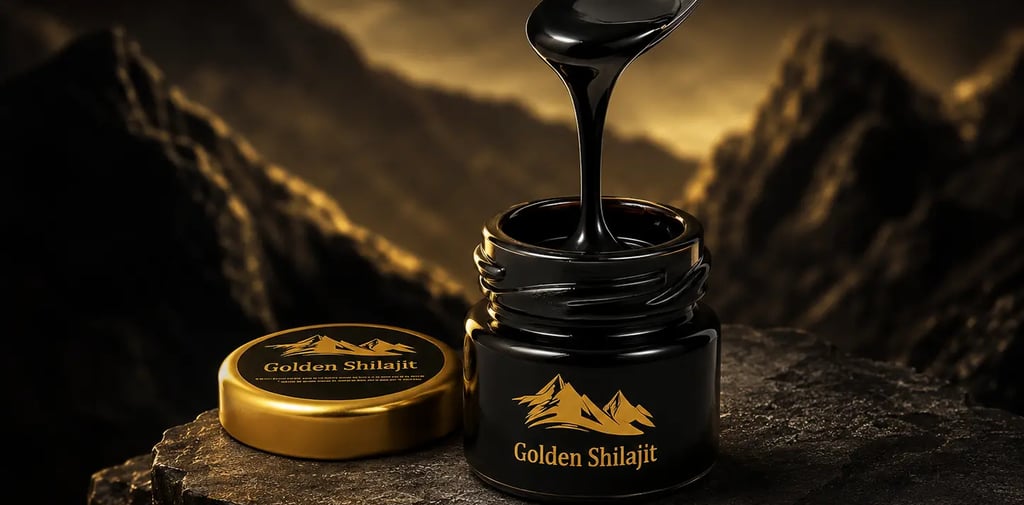
Best Shilajit in Pakistan: The Complete 2026 Buyer's Guide to Authentic, Lab-Tested Himalayan Resin
When it comes to finding the best shilajit in Pakistan, the conversation has shifted dramatically over the past two years. What was once a quiet corner of the wellness market has exploded into a flooded marketplace where authentic Himalayan resin sits beside counterfeit pastes, mislabeled powders, and unverified imports. For Pakistani consumers, the challenge is no longer finding shilajit — it's finding the real thing.
This guide is built on what actually matters: laboratory verification, mineral composition, heavy metal safety, and the scientific markers that separate authentic shilajit from imitation. Whether you're new to ayurvedic supplementation or replacing an unreliable supplier, this article will give you the framework to buy with confidence.
Table of Contents
What Is Shilajit
Why Fake Shilajit Is So Common in Pakistan
Real vs Fake Shilajit: How to Tell the Difference
Understanding Fulvic Acid
Why Heavy Metal Testing Matters
What ICP-MS Testing Actually Means
Why Eurofins Testing Is the Global Standard
How to Verify a Lab Report
How to Identify Real Shilajit at Home
Why Authentic Himalayan Shilajit Costs More
Why Cheap Shilajit Can Be Risky
Shilajit Price in Pakistan: What's Reasonable
How to Choose the Best Shilajit Brand
Frequently Asked Questions
Final Buyer Guide
What Is Shilajit
Shilajit is a sticky, tar-like resin that seeps from the crevices of high-altitude mountain ranges — most notably the Himalayas, Karakoram, Hindu Kush, Altai, and Caucasus. It forms over hundreds, sometimes thousands of years through the slow decomposition of plant matter, mosses, and microbial activity trapped between layers of rock under intense geological pressure.
The result is one of nature's most mineral-dense substances. Pure shilajit resin contains over 80 trace minerals in ionic form, along with two principal bioactive compounds: fulvic acid and humic acid. These molecules are responsible for nearly all of shilajit's clinically studied benefits — mitochondrial support, mineral transport across cell membranes, antioxidant activity, and cellular energy regulation.
In ayurvedic medicine, shilajit has been referenced for more than three thousand years as a rasayana — a rejuvenating substance believed to enhance vitality, stamina, and longevity. Modern research has begun validating these traditional claims, with peer-reviewed studies examining its role in testosterone modulation, mitochondrial bioenergetics, cognitive function, and exercise recovery.
But here's the critical detail most sellers omit: the benefits associated with shilajit only apply to authentic, properly purified, lab-tested resin. Everything else is, at best, an expensive placebo — and at worst, a health risk.
The Geographic Reality
True high-altitude shilajit is harvested between 3,000 and 5,000 meters of elevation. The cold climate, mineral composition of the surrounding rock, and slow oxidative process are what give Himalayan and Karakoram shilajit its potency. Shilajit harvested at lower altitudes, or substances marketed as shilajit but sourced from non-traditional regions, simply do not have the same biochemical profile.
For Pakistani consumers, this matters enormously. Pakistan sits at the geographic heart of two of the world's best shilajit-producing ranges — the Karakoram and the western Himalayas. In theory, this should make original shilajit Pakistan consumers a global benchmark. In practice, the proximity to source has created its own problem: a flood of unregulated supply.
Why Fake Shilajit Is So Common in Pakistan
The Pakistani shilajit market suffers from a paradox. The country has direct access to some of the finest raw shilajit deposits on earth, yet consumers face one of the highest rates of counterfeit and adulterated products globally.
There are several reasons for this.
First, there is no enforced regulatory framework for shilajit specifically. Unlike pharmaceuticals, herbal supplements in Pakistan operate under loose oversight, and shilajit sellers are rarely required to provide third-party verification before bringing a product to market.
Second, raw shilajit is expensive and labor-intensive to harvest. Genuine resin must be collected by hand from remote cliff faces, then purified through water filtration and low-temperature evaporation — a process that can take weeks. Counterfeiters bypass this entirely by mixing cheap fillers like shoe polish, coal tar, ash, jaggery, soil, beeswax, or even bitumen, then selling the result as "pure shilajit resin."
Third, the visual similarity is deceptive. A skilled counterfeiter can produce a paste that looks, smells, and even partially behaves like real shilajit. Without lab analysis, the average consumer has no reliable way to distinguish them.
Fourth, online marketplaces have amplified the problem. Instagram sellers, Facebook pages, and even some established e-commerce platforms list shilajit with no documentation, no batch testing, and no traceability. Consumers searching for authentic shilajit Pakistan often end up with whatever ranks highest on social media — not what's actually been verified.
The result is a market where, by some industry estimates, the majority of shilajit sold in Pakistan fails basic purity tests. This is not a fringe concern. It's the central issue facing anyone trying to buy real shilajit Pakistan consumers can actually trust.
Real vs Fake Shilajit: How to Tell the Difference
The difference between authentic shilajit resin and a fake paste isn't subtle once you know what to look for. Once you understand the physical, sensory, and documentary markers that define genuine resin, the contrast becomes obvious.
Texture at room temperature is the first clue. Authentic shilajit resin sits firm and glossy, with a semi-solid consistency that holds its shape. Fake pastes, by contrast, tend to feel soft, sticky, and oily straight out of the jar — a telltale sign of emulsifiers, glycerin, or wax-based fillers.
Behavior with heat is one of the most reliable indicators. Real shilajit softens and becomes pliable in warm hands within thirty to sixty seconds. Counterfeit pastes either melt inconsistently into a greasy film, or remain stubbornly uniform regardless of temperature.
Behavior with cold completes the picture. Genuine resin hardens and becomes brittle when refrigerated — you can actually snap a chilled piece. Fake products stay soft, gummy, or rubbery because the fillers they contain don't respond to temperature the way natural resin does.
Water solubility is perhaps the most decisive home test. Authentic shilajit dissolves completely in warm water, producing a clear, translucent golden-brown to dark amber liquid. Fake shilajit almost always leaves something behind — an oily film floating on the surface, sediment settling at the bottom, or undissolved chunks suspended in cloudy water.
Smell tells you a great deal before you even taste it. Real shilajit has an unmistakable earthy, smoky aroma with a faintly bitter undertone — never sweet, never artificial. Fakes are often odorless, chemically synthetic, or oddly sweet from added jaggery or molasses.
Taste confirms what the smell suggests. Authentic resin is intensely bitter and mineral-forward, with a complexity that lingers. Fake shilajit usually tastes sweet, salty, or simply flavorless — none of which has any business being in a genuine product.
The burn test separates resin from tar-based imitations. A small amount of real shilajit will bubble gently when exposed to a flame and produce a light ashy residue, but it will not catch fire or sustain an open flame. Counterfeit products containing bitumen, shoe polish, plastic, or wax will ignite, produce thick black smoke, or release a chemical odor.
Lab documentation is the single most objective marker. Authentic shilajit comes with a current ICP-MS heavy metal report and fulvic acid certification from an accredited laboratory like Eurofins. Fake shilajit either has no documentation at all, or relies on vague self-issued claims and unverifiable in-house "tests."
Color when dissolved is the final visual check. Real shilajit produces a golden to dark brown liquid that is translucent — you can see light through it. Fake shilajit creates a black, cloudy, or muddy solution that obscures light entirely, indicating either heavy contamination or non-shilajit fillers.
The Resin vs Paste Distinction
This is where many consumers get confused. Pure shilajit resin is a thick, semi-solid substance with a glossy appearance and a melting behavior that responds to temperature. Fake "paste" products often look like resin but behave very differently — they don't harden when cooled, they don't dissolve cleanly, and they frequently contain emulsifiers or oils that give them a uniform consistency.
Authentic resin, by contrast, has natural variability. Two batches from the same mountain region can differ slightly in color, hardness, and dissolution speed — because it's a natural substance, not a manufactured paste.
If a product looks too uniform, behaves too predictably, and never hardens regardless of temperature, treat that as a warning sign.
Understanding Fulvic Acid
Fulvic acid is the single most important compound in shilajit. It's a low-molecular-weight organic acid that acts as a natural chelator — meaning it binds to minerals and transports them across cell membranes with high bioavailability.
In scientific literature, fulvic acid is studied for its role in:
Mitochondrial energy production and electron transport
Anti-inflammatory and antioxidant activity
Mineral absorption, particularly iron, magnesium, and zinc
Gut microbiome modulation
Cellular hydration and nutrient delivery
When you read about shilajit's benefits — improved energy, cognitive support, recovery, mineral absorption — fulvic acid is doing most of the work. Which is why fulvic acid concentration is the single most important number on a shilajit lab report.
What Realistic Fulvic Acid Percentages Look Like
This is where the market gets misleading. Walk into any shilajit listing online and you'll find products claiming 70%, 80%, even 90% fulvic acid content. These numbers are almost always false.
Here's the reality, backed by peer-reviewed analytical studies of shilajit samples from across the Himalayan and Karakoram regions:
Fulvic Acid Percentage What It Likely Indicates
10% – 20% Possible authentic resin, depending on extraction method
20% – 30% High-quality, properly purified Himalayan resin
30% – 50% Exceptional batch — verifiable only through accredited lab testing
55% – 90% Almost certainly fabricated or measured using unreliable methods
Genuine shilajit resin, even from premium high-altitude sources, typically tests between 10% and 30% fulvic acid when measured by validated methods such as the Lamar method or ISO 19822. Exceptional batches may reach the 30%–50% range, but only when verified through internationally accredited laboratories using standardized methodology.
When a seller claims 80% fulvic acid, one of three things is happening: they're using a non-standard test that inflates results, they're confusing fulvic acid with total humic substances, or they're simply making the number up.
The takeaway: don't chase the highest percentage. Chase the most credible verification.
Why Heavy Metal Testing Matters
This is the most overlooked safety issue in the entire shilajit market — and arguably the most important.
Because shilajit forms naturally from rock and organic matter, it absorbs whatever is in its environment. In clean, high-altitude regions with low industrial contamination, this produces a mineral-rich, safe substance. But shilajit harvested from lower elevations, polluted regions, or improperly purified sources can contain dangerous levels of heavy metals — lead, arsenic, mercury, and cadmium being the most concerning.
These metals bioaccumulate. They don't get flushed from the body easily, and chronic exposure — even at low doses — has been linked to neurological damage, kidney dysfunction, cardiovascular disease, and developmental issues.
A 2023 analytical review published in the Journal of Ayurveda and Integrative Medicine found that a significant portion of commercial shilajit samples tested in South Asia contained heavy metal concentrations exceeding international safety thresholds. The samples that passed were almost exclusively those from verified high-altitude sources that had undergone proper aqueous purification.
This is why lab tested shilajit isn't a marketing buzzword. It's a non-negotiable safety requirement.
What ICP-MS Testing Actually Means
ICP-MS stands for Inductively Coupled Plasma Mass Spectrometry. It's the gold standard analytical technique for detecting trace elements and heavy metals at extremely low concentrations — measured in parts per billion.
Here's how it works in simplified terms: a sample is ionized in a high-temperature plasma, then the ions are passed through a mass spectrometer that identifies and quantifies each element by atomic mass. The technique can detect over 70 elements simultaneously with exceptional accuracy.
For shilajit testing, ICP-MS is used to measure:
Lead (Pb) — neurotoxic, especially harmful to children and pregnant women
Arsenic (As) — carcinogenic, linked to skin, lung, and bladder cancers
Mercury (Hg) — neurotoxic, damages the nervous system and kidneys
Cadmium (Cd) — accumulates in kidneys, classified as a human carcinogen
A credible shilajit lab report should show ICP-MS results for these four metals at minimum, with concentrations well below internationally recognized safety thresholds — typically referencing standards from the US Pharmacopeia (USP), European Pharmacopoeia, or WHO guidelines.
Sellers offering shilajit without ICP-MS verification are asking you to take their word for the safety of a substance whose entire reason for existing is its mineral content. That's not acceptable in 2026.
Why Eurofins Testing Is the Global Standard
Not all laboratories are equal. A "lab report" from an unaccredited or in-house facility tells you almost nothing — the methodology may be flawed, the equipment uncalibrated, or the results entirely fabricated.
Eurofins is one of the world's largest networks of bioanalytical testing laboratories, with operations in over 60 countries and accreditation from ISO/IEC 17025 — the international standard for testing and calibration laboratories. When a supplement is tested by Eurofins, the results carry the weight of an independent, internationally recognized third party with no commercial interest in the outcome.
For shilajit, Eurofins testing typically covers:
ICP-MS heavy metal panel
Microbiological contamination (yeast, mold, E. coli, salmonella)
Fulvic and humic acid quantification using validated methodology
Moisture content and ash analysis
Pesticide and solvent residue screening
A shilajit brand that submits its product to Eurofins is signaling something important: they're willing to have their product evaluated by a laboratory that cannot be influenced, bribed, or manipulated. This is the highest bar in the industry, and it's the standard Pakistani consumers should expect from any product positioning itself as authentic shilajit Pakistan or himalayan shilajit Pakistan.
You can review a real example of accredited lab documentation at goldenshilajit.pk/shilajit-lab-report to understand what proper third-party testing looks like in practice.
How to Verify a Lab Report
A lab report is only useful if you can verify it's real. Counterfeit shilajit sellers have grown sophisticated — many now produce fake "lab reports" with official-looking letterheads and fabricated data.
Here's how to evaluate a shilajit lab report properly.
1. Check the laboratory name and accreditation. A legitimate report will name the testing laboratory clearly and reference an accreditation body — ISO/IEC 17025, A2LA, UKAS, or similar. If the lab isn't named, or the name doesn't match a verifiable institution, the report is meaningless.
2. Look for a sample identification number. Real reports include a unique sample ID, batch number, and receipt date. This allows the report to be traced back to a specific batch of product.
3. Verify the methodology. The report should specify the analytical methods used — ICP-MS for heavy metals, Lamar method or ISO 19822 for fulvic acid, plate counts for microbiology. Vague reports that just list percentages without methodology are red flags.
4. Check the date. Lab reports should be recent — ideally within the last 12 months for the batch you're buying. A five-year-old report tells you nothing about what's currently in the jar.
5. Cross-reference with the laboratory. Major labs like Eurofins allow report verification. If a brand provides a report number, you should be able to confirm it independently.
6. Look for completeness. A real report has multiple pages: cover sheet, methodology, results, reference values, signatures. A single-page summary with no supporting data is almost always fake.
If a seller cannot provide a complete, verifiable lab report — or worse, refuses to share one — the answer is simple. Don't buy. The shilajit market has matured past the point where blind trust is acceptable.
How to Identify Real Shilajit at Home
While lab testing is the only definitive way to verify shilajit, there are several at-home checks that can help you assess authenticity before — or after — purchase. These are not substitutes for laboratory verification, but they're useful additional filters.
The Water Dissolution Test
Place a pea-sized amount of resin in a glass of warm (not hot) water. Authentic shilajit will dissolve completely within a few minutes, turning the water a translucent golden-brown to dark amber color. There should be no oil slick on the surface, no sediment at the bottom, and no chunks remaining.
Fake shilajit often leaves an oily residue, sinks without dissolving, or produces a muddy, opaque liquid.
The Temperature Response Test
Take a small amount of resin and hold it between your fingers. Authentic shilajit responds to body heat — it softens and becomes pliable within 30 to 60 seconds. Place that same softened resin in the refrigerator for 15 minutes, and it should become firm and slightly brittle.
Fake pastes either don't respond to temperature at all, or they remain consistently soft regardless of conditions because they're emulsified with oils or waxes.
The Burn Test
This is a more advanced check and should be done carefully. A small amount of authentic shilajit, when exposed to flame, will bubble and produce a slight ashy residue but will not catch fire or sustain a flame. Fake shilajit containing tar, plastic, or wax will ignite, produce black smoke, or smell chemical.
The Taste and Smell Profile
Genuine shilajit has an intense, bitter, mineral-forward taste with a smoky, earthy aroma. It's not pleasant — and it shouldn't be. Anything that tastes sweet, salty, neutral, or chemical is not authentic resin. The bitterness is from the fulvic and humic acid content, which is exactly what you're paying for.
These at-home tests work best in combination. A product that passes all four is likely authentic. A product that fails even one deserves skepticism.
Why Authentic Himalayan Shilajit Costs More
Price is one of the most reliable initial filters in the shilajit market, and understanding why authentic resin costs what it does will help you avoid both overpaying and underpaying.
Harvesting cost. Raw shilajit is hand-collected from remote cliff faces at altitudes between 3,000 and 5,000 meters. Collectors often spend weeks in the mountains, working in dangerous conditions, to gather modest quantities. Labor costs alone make authentic raw material expensive.
Purification cost. Proper shilajit purification involves dissolving raw material in pure water, filtering it through fine mesh to remove organic debris, then slowly evaporating the water at low temperatures (below 40°C) to preserve the bioactive compounds. This process can take two to four weeks per batch and significantly reduces the yield — sometimes by 50% or more.
Testing cost. Accredited laboratory testing through facilities like Eurofins costs hundreds of dollars per panel. For brands testing every batch, this adds a meaningful per-gram cost that fly-by-night sellers simply don't incur.
Packaging and traceability. Premium shilajit is packaged in glass jars (plastic can leach into the resin), with batch numbers, expiry dates, and QR codes linking to lab documentation. This infrastructure costs money.
When you compare a properly produced, lab-verified Himalayan resin against an unverified paste from an online marketplace, the price gap reflects real differences in sourcing, processing, and safety — not just branding.
Shilajit price in Pakistan for authentic, lab-tested resin typically ranges higher than unverified alternatives, but the gap exists for legitimate reasons. You can review pricing for verified products at goldenshilajit.pk/collections/all to understand what reasonable pricing looks like for genuine product.
Why Cheap Shilajit Can Be Risky
There's a common assumption that all shilajit is essentially the same and that paying less is just smart shopping. With shilajit specifically, that assumption can be genuinely dangerous.
Cheap shilajit is cheap for one of three reasons.
Reason one: it's not actually shilajit. Fillers like jaggery, ash, shoe polish, soil, and bitumen are extremely inexpensive. A counterfeiter can produce a kilogram of fake "shilajit paste" for a few hundred rupees in ingredient cost. At best, you're buying an inert substance with no benefits. At worst, you're ingesting toxic materials.
Reason two: it's contaminated. Shilajit harvested from low-altitude or industrially polluted regions, or processed without proper purification, can contain heavy metals at levels that exceed safety thresholds. The seller saves money by skipping testing and purification. You pay the cost in long-term health consequences.
Reason three: it's been diluted. Some sellers blend small amounts of real shilajit with fillers, then sell the mixture as pure resin. The product passes a basic visual inspection and even some at-home tests, but the actual concentration of fulvic acid and beneficial minerals is a fraction of what's claimed.
The economic reality is straightforward: authentic, lab-tested, properly purified Himalayan shilajit cannot be produced at the prices many sellers are charging. If a deal seems too good to be true with shilajit, it almost always is.
Shilajit Price in Pakistan: What's Reasonable
Without endorsing specific price points (which fluctuate), here's a framework for evaluating shilajit pricing in the Pakistani market.
Price Range What It Usually Indicates
Very low (suspiciously cheap) Almost certainly fake, diluted, or contaminated
Low-to-mid market Possibly unverified, often imported wholesale without testing
Mid-to-premium Reasonable for properly purified resin with basic documentation
Premium with full lab verification Authentic Himalayan resin, ICP-MS tested, Eurofins-grade verification
The premium tier isn't inflated branding — it reflects the actual cost of producing a substance that has been harvested ethically, purified properly, tested thoroughly, and packaged safely. Brands operating in this tier, such as Golden Shilajit, publish their lab reports openly and stand behind their batch documentation. You can examine an example of this transparency at goldenshilajit.pk.
How to Choose the Best Shilajit Brand
Putting all of the above together, here's a practical checklist for evaluating any shilajit brand in Pakistan.
1. Do they publish lab reports? Not just claim testing — actually publish the documents. Look for ICP-MS heavy metal results and fulvic acid quantification on a per-batch basis.
2. Is the testing done by an accredited lab? Eurofins, SGS, or another ISO/IEC 17025 accredited facility. In-house testing or unnamed labs are insufficient.
3. Are the fulvic acid claims realistic? Anything between 10% and 30% is plausible. Exceptional batches in the 30%–50% range require full third-party verification. Anything above 55% should be treated as fabricated.
4. Is the resin form authentic? Glossy, firm at room temperature, responsive to heat, fully water-soluble.
5. Is there batch traceability? Real brands provide batch numbers, harvest dates, and the ability to trace a specific jar back to a specific lab report.
6. Is the source disclosed? Authentic brands name their harvesting region — Karakoram, Himalayan, Hindu Kush — rather than vague claims about "premium sources."
7. Is the packaging appropriate? Glass jars, sealed, with clear labeling. Plastic containers, unlabeled tubs, and hand-packaged products without batch information are warning signs.
8. What does the brand's content say? Educational brands that explain methodology, source, and testing transparently demonstrate a level of expertise that vanity brands cannot fake.
9. Is there a clear refund or quality guarantee? Brands confident in their product back it with clear policies.
10. What do verified reviews say — and across multiple platforms? Look for consistency. Reviews on the brand's own site, Trustpilot, Google, and independent forums should align. Discrepancies suggest review manipulation.
A brand that satisfies most or all of these criteria is operating in the top tier of the Pakistani shilajit market. Anything less, and you're taking on risk that's no longer necessary given the availability of properly verified alternatives.
Frequently Asked Questions
What is the best shilajit in Pakistan? The best shilajit in Pakistan is one that is sourced from high-altitude Himalayan or Karakoram regions, purified through traditional aqueous methods, and verified by an internationally accredited laboratory such as Eurofins. The single most important criterion is third-party lab documentation showing ICP-MS heavy metal results and validated fulvic acid quantification.
How do I know if my shilajit is real or fake? Real shilajit dissolves completely in warm water, turning it golden-brown, has a strongly bitter mineral taste, softens in heat and hardens in cold, and is backed by accredited lab reports. Fake shilajit typically leaves residue when dissolved, tastes sweet or chemical, doesn't respond to temperature changes, and has no verifiable testing documentation.
What is a normal fulvic acid percentage in real shilajit? Authentic Himalayan shilajit typically contains between 10% and 30% fulvic acid when measured using validated methods like the Lamar method or ISO 19822. Exceptional batches verified by accredited laboratories may reach 30%–50%, but claims of 55%, 80%, or 90% fulvic acid are almost always inaccurate and indicate either fraudulent testing or false advertising.
Why is heavy metal testing important for shilajit? Shilajit naturally absorbs minerals from its surrounding rock, which can include toxic heavy metals like lead, arsenic, mercury, and cadmium if the source region is contaminated or improperly purified. ICP-MS testing through accredited laboratories ensures these metals are below internationally recognized safety thresholds.
What does ICP-MS testing mean? ICP-MS stands for Inductively Coupled Plasma Mass Spectrometry, a highly precise analytical technique used to detect and quantify trace elements at extremely low concentrations. It is the international gold standard for testing heavy metal contamination in supplements and food products.
Why does authentic Himalayan shilajit cost more? Authentic shilajit is hand-harvested at high altitudes, purified through weeks-long aqueous extraction, tested batch-by-batch at accredited laboratories, and packaged with full traceability. These processes have legitimate costs that cheap imitations bypass entirely, which is why pricing reflects real differences in safety and quality.
Can fake shilajit be dangerous? Yes. Counterfeit shilajit may contain shoe polish, coal tar, bitumen, ash, or industrial fillers. Even when these substances are non-toxic individually, regular consumption can cause digestive issues, allergic reactions, and exposure to undisclosed contaminants. Shilajit from unverified sources may also contain heavy metals exceeding safety limits.
What is the difference between shilajit resin and shilajit paste? Authentic shilajit resin is a naturally occurring, semi-solid substance that responds to temperature — firm when cold, pliable when warm. Many products labeled as "paste" are emulsified mixtures containing oils, waxes, or fillers that maintain uniform consistency regardless of temperature, which is a signature of adulterated or fake product.
Where does the best shilajit in Pakistan come from? The highest-quality shilajit available in Pakistan typically comes from the Karakoram and western Himalayan ranges at elevations above 3,000 meters. These regions produce resin with optimal mineral composition and lower environmental contamination compared to lower-altitude sources.
How should I store shilajit? Store shilajit resin in its original sealed glass container at room temperature, away from direct sunlight and humidity. Properly stored, authentic resin has an extremely long shelf life — often years — due to its naturally preservative mineral and acid composition.
Final Buyer Guide
If you take only one thing from this article, let it be this: in 2026, there is no longer any reason to buy unverified shilajit. The infrastructure for accredited laboratory testing exists. The methodology is well-established. The reputable brands publish their results openly. The only thing standing between you and authentic, safe, effective shilajit is the discipline to demand verification before you buy.
Here's the final framework, distilled.
Demand lab documentation. Specifically, ICP-MS heavy metal panels and validated fulvic acid quantification from an accredited laboratory like Eurofins. If it's not published, it doesn't exist.
Reject unrealistic claims. Fulvic acid percentages above 55% should be treated as fabricated. Anything in the 60%–90% range is marketing fiction. Exceptional batches in the 30%–50% range require full third-party accreditation to be credible.
Trust resin behavior, not marketing. Authentic shilajit responds to heat, dissolves in water, tastes bitter, and smells earthy. These are physical properties counterfeiters struggle to replicate consistently.
Pay for traceability, not branding. The premium you pay for verified shilajit covers harvesting integrity, purification quality, lab testing, and batch traceability — not influencer marketing or premium packaging.
Treat your supplier as a long-term decision. Once you find a brand whose lab reports check out, whose product passes your at-home tests, and whose customer service is responsive, stick with them. The cost of switching to an unverified alternative is rarely worth the marginal savings.
The market for best shilajit in Pakistan has matured. The tools to buy with confidence are accessible. The brands operating at the highest standard — those publishing their Eurofins lab reports, sourcing from verified high-altitude regions, and offering full batch traceability — have made it possible for Pakistani consumers to access the same quality of shilajit available anywhere in the world.
Your job, as the buyer, is simple. Ask for the documentation. Verify it. And only then, open the jar.
Related Articles — Golden Shilajit Pakistan
Continue your research with these verified guides on authentic, lab-tested shilajit.
Shilajit Benefits & Composition The science behind authentic shilajit — minerals, fulvic acid, and what makes pure resin effective.
Fulvic Acid Benefits — Eurofins USA Verified Real fulvic acid ranges in authentic shilajit and how to spot inflated lab claims.
Official Lab Reports — Eurofins Tested View verified ICP-MS heavy metal and fulvic acid lab reports for every batch.
Pure Shilajit — Lab-Tested Himalayan Resin What "pure" really means — sourcing, purification, and certified safety standards.
Shilajit Dosage Guide Safe daily dosage, timing, and best practices for long-term use.
Shop All Golden Shilajit Products Browse the complete range of lab-tested resin and drops with full batch documentation.
Contact
Follow
info@goldenshilajit.pk
Whatsapp-03348455205
© 2026. Golden Shilajit All rights reserved.
Golden Shilajit Pakistan is a registered brand of Himalayan Innate Pvt Ltd.
Unauthorized sale or distribution is strictly prohibited and will result in legal action.
These statements have not been evaluated by the Food and Drug Administration. This product is not intended to diagnose, treat, cure, or prevent any disease.